Inside Andhra Pradesh’s Mega Parent-Teacher Meeting—and the Kitchen Sink Model of Reform
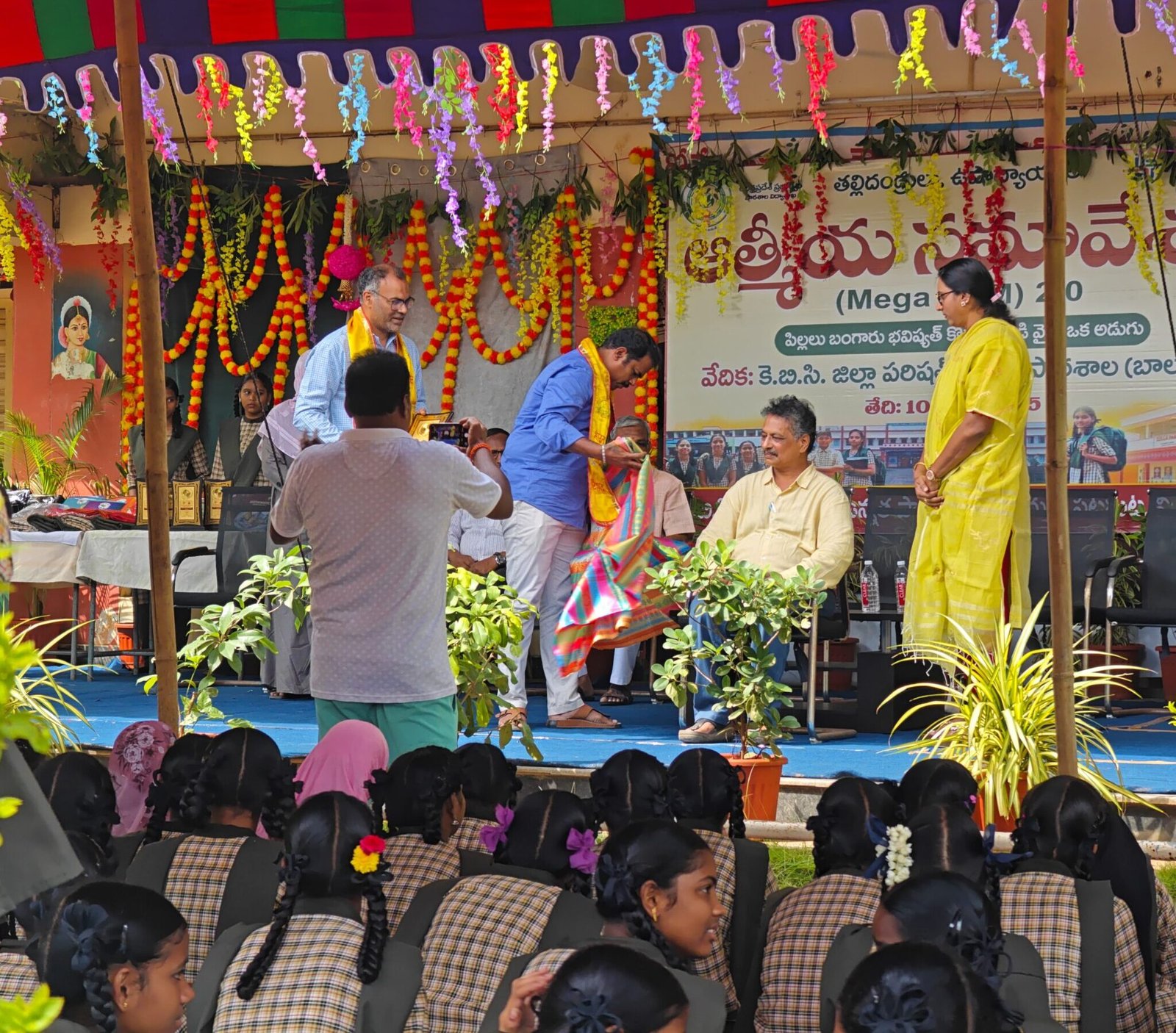
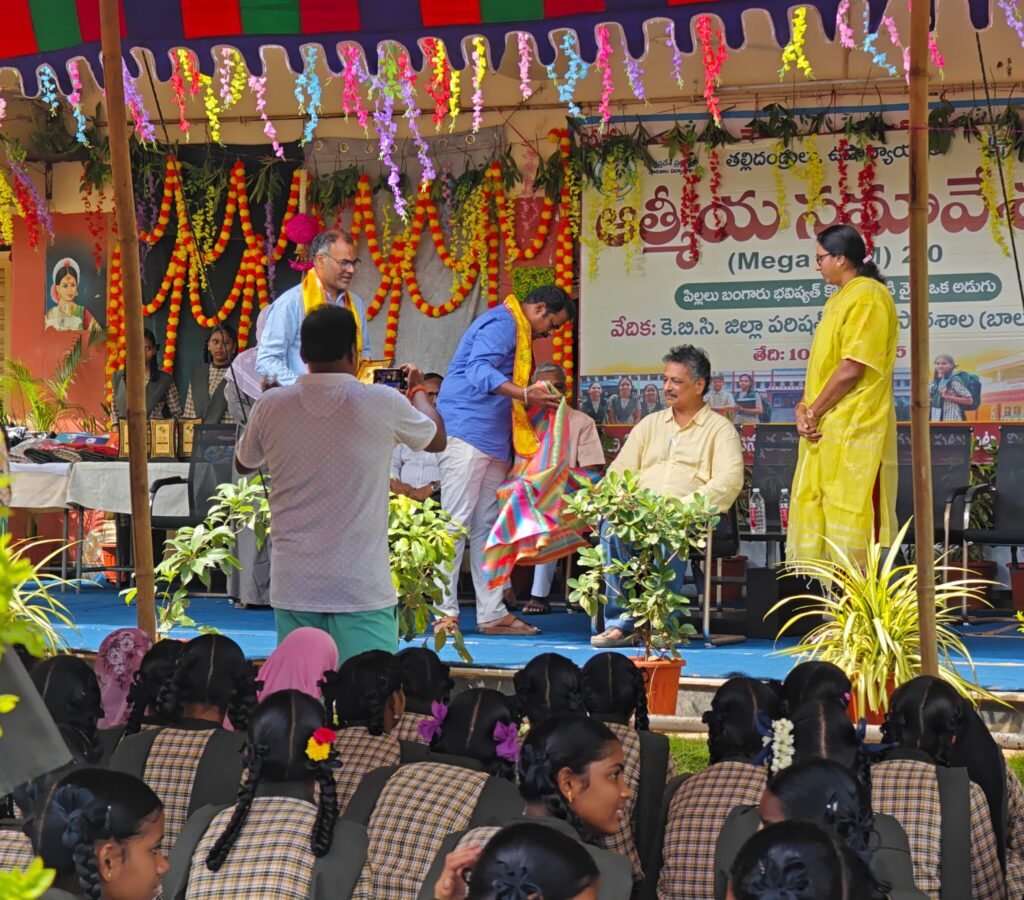
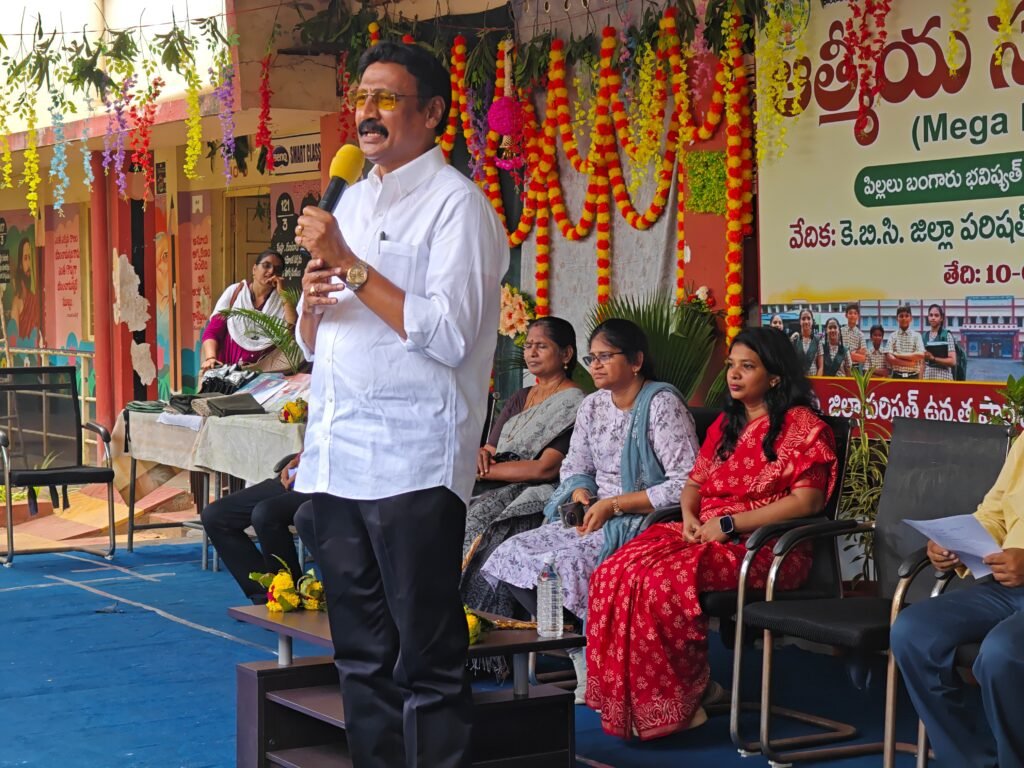
On a seasonably hot Thursday in early July, the courtyard of Zilla Parishad High School in Kurnool looks like a village fair. Mothers in bright saris balance stainless‑steel water bottles and toddlers; fathers queue at a counter where eager volunteers register sapling adoptions on the LEAP mobile app. A banner behind the headmaster’s dais proclaims, in Telugu and English, MEGA PARENT‑TEACHER MEETING 2.0 – TOWARDS HOLISTIC EDUCATION. Somewhere between the green‑passport selfie booth and the Rashtriya Bal Swasthya Karyakram health kiosk, a stack of student progress cards waits for collection, already curling at the corners in the heat.
Welcome to Andhra Pradesh’s latest bid for educational grandeur: a single‑day jamboree spanning 61,000 schools and—if the numbers hold—more than 2.2 crore participants, enough to secure a place in the Guinness World Records.
The Eight‑Point Circus
The official circular, dispatched from Amaravati with “MOST URGENT AND IMPORTANT” stamped in red, prescribes an eight‑item agenda. Teachers must hand over four‑page Holistic Progress Cards; headmasters must host public meetings to air infrastructure gaps; health teams screen every child for thirty‑two conditions under RBSK; photo booths and “dream walls” invite parents to pen aspirations; game stalls promise fellowship; alumni narrate success stories; students pledge saplings “Ek Ped Maa Ke Naam” and log them on the Green Passport; finally, the LEAP app tallies each act for posterity.
On paper, every bullet looks defensible. In practice, they jostle like passengers on an overcrowded bus. By noon in Kurnool, the sapling counter eclipses the progress‑card desk three to one. Parents linger for selfies under a neem sapling christened Anasuya. Few drift toward the blackboard where a math teacher waits, grade book open, to explain why little Rafi still stumbles over fractions.
Holism Without Hierarchy
The overload is no accident. Since 2018, Samagra Shiksha—the union government’s integrated school‑education scheme—has urged states to pursue a “holistic, integrated, inclusive and activity‑based” vision, stitching everything from early‑childhood care to vocational training under one fiscal quilt. Andhra Pradesh embraced the mandate with zeal; every vertical—from nutrition to environment—now eyes the Mega PTM as free real estate for its pet initiative.
Ring‑fenced central funds reinforce the impulse. RBSK field teams must produce screening tallies; the environment wing needs photographic proof of sapling pledges; ICT budgets are happier when LEAP downloads spike. Nobody owns the burden of saying no.
The Optics Economy
If Samagra supplies the philosophy, politics provides the dopamine. Three weeks before the event, State Project Director B. Srinivasa Rao promised reporters “participation of over 2.28 crore people” and urged sarpanches, alumni, and retired officials to sign up as Guinness‑certified witnesses in the LEAP app—“no other intent or hidden purpose,” he added helpfully. A record, after all, photographs better than an incremental rise in reading comprehension.
That pursuit of spectacle ricochets down the hierarchy. District Collectors chase headcounts; headmasters chase photos; teachers chase safe, shoot‑and‑upload moments. The learning conversation—quiet, often uncomfortable—slides down the priority list.
“We Did Everything, So Nothing Went Wrong”
By dusk, the Kurnool PTM winds down with an impromptu folk‑dance troupe sponsored by the local MLA. The headmaster is thrilled: “Crowd is double to last year!” he tells me, wiping sweat from his brow. Asked how many parents discussed foundational numeracy, he shrugs. “They were busy at the saplings counter.”
The shrug masks a deeper design flaw. In systems engineering, focus is achieved by budgeting scarce resources—time, money, attention—against a single, high‑value goal. Andhra Pradesh’s circular does the opposite: it allocates infinite ambition to a finite school day. Without hierarchy, every activity secures equal moral status; denial feels like betrayal. The result is bureaucratic homeopathy: a dilute solution of good intentions.
Anatomy of Overload
Consider the cascade:
-
Holistic policy language invites every department to hitch a ride.
-
Vertical funding lines demand photographic “proof of activity.”
-
Guinness‑size KPIs convert quality into quantity.
-
Field‑level asymmetry—one‑teacher schools and 2,000‑student campuses receive the same mandate.
-
Short electoral cycles reward visible bustle over slow gains.
At each stage, incentives reward expansion, not subtraction. As one district officer quips, off record, “We did everything, so nothing went wrong.” The joke lands because the metric for “wrong” is undefined.
When Saplings Upstage Report Cards
Green Passport, the environmental centre‑piece, encapsulates the tension. Students plant a tree “in their mother’s name,” record GPS coordinates, then update growth every three months. The idea is charming; the execution burdens principals with tracking saplings as far away as a family’s ancestral farm. Meanwhile, Holistic Progress Cards, meant to anchor the academic core, are handed over like election pamphlets—no space, amid the din, for the hard talk about missing homework.
The Teacher’s Lament
Asha, a middle‑school math teacher in NTR district, describes the day as “weddings and ward rounds mixed together.” At her school, the medical team commandeered the only shaded corridor, so teachers shifted parent conferences outdoors. By 1 p.m., afternoon heat thinned the queue. “We asked the parents to come back later,” she says, “but they thought the important part was done once the Green Passport was stamped.” Her voice carries no bitterness, only resignation.
Lessons From Elsewhere
States as far apart as Delhi and Uttarakhand have run ambitious community events—happiness classes in Delhi, School Chalo Abhiyan marches in Uttarakhand—but each targeted a narrow slice of the problem: socio‑emotional learning, enrolment drives. Andhra Pradesh’s Mega PTM attempts everything at once, a buffet without a main course.
Toward a Leaner Mega
Fixes are conceptually simple, politically brutal:
-
Declare a single north‑star metric. For PTMs, it could be “percentage of parents who leave with a written remedial plan.” Anything unrelated yields to that end.
-
Limit circulars to three objectives, ranked. Additional items must displace, not append.
-
Tie reimbursements to outcome‑aligned artefacts rather than photo uploads.
-
Publish a one‑page theory‑of‑change with every directive. Bureaucrats, like writers, think better in short sentences.
None of this requires new money; it requires veto power—somebody to say the quiet administrative no.
Epilogue in the Dust
As twilight settles, custodians sweep stray plastic cups off the Kurnool courtyard. The saplings, now arrayed like a botanical honour guard, wait to be ferried home. In a corner, uncollected progress cards flap in the breeze. Come Monday, teachers will resume the slow work of catching children up on lost foundational skills—work that rarely makes headlines or record books.
Education, like tree‑planting, is slow magic. But under the optics of the Everything Event, slowness has no seat at the table. Until Andhra Pradesh rewrites its circulars to privilege depth over breadth, the state will keep watering a forest of initiatives while the root—the hard business of teaching children to read, count, and think—grows thirstier by the year.
Comments
Note: Comments are powered by GitHub Discussions. You can comment using your GitHub account.